
Spanning 2 million square kilometres of rich seas, rugged mountains, pristine beaches and dazzling coral reefs, the Cook Islands is a true Polynesian paradise. The country encompasses 15 individual islands including Rarotonga, which houses the nation’s capital, and is a playground for adventurers, honeymooners, beach bums and travelling families.
If you’re hoping to catch the whale migration, July to October is your best chance to spot humpbacks from the shore.
Cook Islands Weather
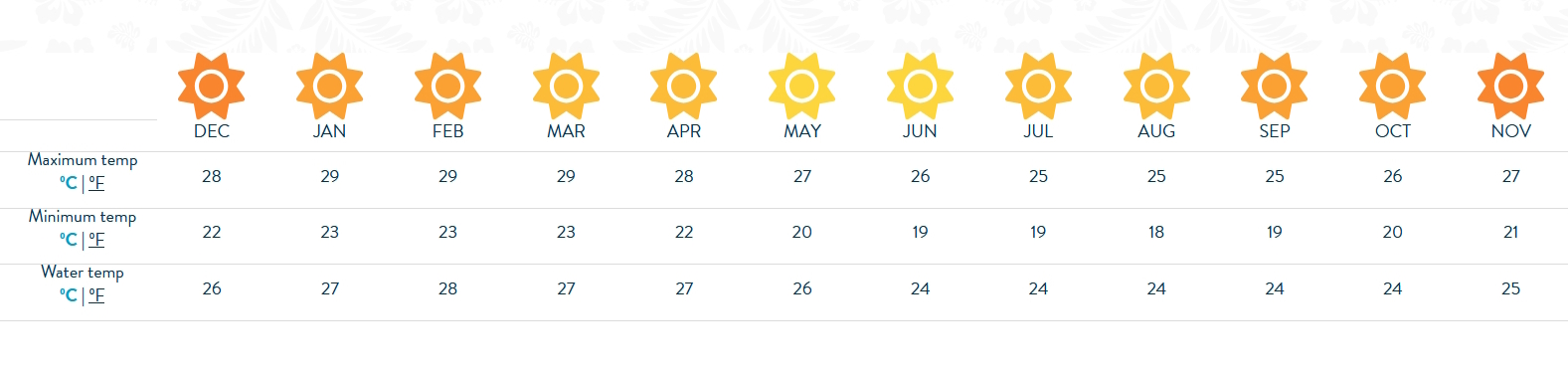
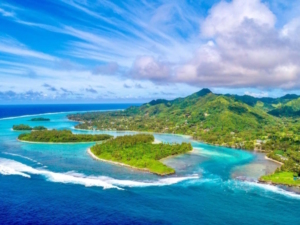 The Cook Islands is blessed with a pleasant and warm climate year-round, with slightly cooler days through winter and slightly warmer days through summer.
The Cooks Islands are located just below the equator, in the South Pacific, and enjoy a tropical climate. Summers are hot, humid and often stormy (called ‘rainy season’ for a reason!), while winters are sunny and warm. That said, the best time to visit the Cook Islands is pretty much any time of year. Even in rainy season, from January to March, the downpours are sudden and often followed by blazing sun once the clouds clear. Plus, all that rain makes for some epic waterfall action. If you’re talking weather alone, July and August are the best months to visit the Cook Islands.
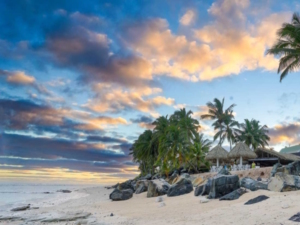 However, it’s never just about the weather. Perfect conditions also mean an abundance of visitors and you may find that the winter months of June through August are just too busy.
The best time to travel in Cook Islands is during what’s known as ‘shoulder season’ either side of winter. April – May and September – October give you an idyllic combination of dry skies and warm weather. The water is clear and the islands of Rarotonga and Aitutaki are a little quieter than in the winter months.
Accommodation In The Cook Islands
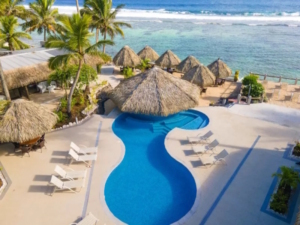 The Cook Islands has accommodation options to suit all budgets, and there is no building taller than a coconut tree. In Rarotonga, you’ll find a blend of upscale resorts, family-friendly hotels, smaller guest houses, apartments and bungalows. There are also eco retreats like the award-winning Ikurangi, which offers luxury glamping tents.
Cook Islands Time Difference
The time difference between the Cook Islands and New Zealand has caught travellers by surprise in the past. Despite being under a four-hour flight, the Cook Islands is actually 22 hours behind New Zealand! So when booking your hotel, don’t be fooled thinking it’s just a two hour time difference; you don’t want to be caught not having booked enough nights’ accommodation.
As you can see, the Cook Islands holds equal parts of excitement and relaxation that is sure to please all kinds of travellers.
Getting Around Cook Islands
You won’t find any bustling intersections or traffic jams in Raro, so getting around the small island is a relaxing activity in itself.
Each island in the Cook Islands is very compact, so it’s easy to get around regardless of what mode of transport you choose. Whether you opt for a leisurely bicycle ride, scooters, a hire car or a simple walk, you’re never too far from your destination.
Bus Travel
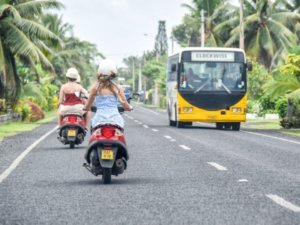 Rarotonga is the only island with buses. It provides an efficient bus service that runs around the island in both a clockwise and anti-clockwise direction. Depending on what route you wish to take, you’ll need to time your departure for on the hour or every half-hour. The buses tend to stop outside hotels and other main areas, but you need to remember to flag the driver down (wave your hand). Buses are more frequent during the day and you can’t catch the anti-clockwise route after 4:30pm or on Sundays. A single journey costs about $5 NZD and 10-ride tickets can also be purchased.
Car Travel
Another great way to explore Rarotonga and Aitutaki is by renting a car and heading out onto the open road. You can find a range of quality vehicles such as jeeps, convertibles, 4WDs and stock-standard cars from reliable hire companies. Vehicles usually cost at least $70 per day.
On-Foot Travel
Go back to the good old days and trek around the islands by putting one foot in front of the other. Most of the smaller islands don’t have any hire facilities, so this is often your only option. The Cook Islands is also one of the safest places to hitchhike in regards to meeting friendly people, but be prepared for the typical absence of seatbelts in local’s cars or riding in the back of a truck.
Air Travel
Most people choose to travel between islands via Air Rarotonga, a speedy and convenient airline that runs regular flights to Rarotonga, Aitutaki, Atiu, Mauke, Mangaia and Mitiaro. The airline services other islands as well, but these flights are less frequent and subject to weather. Usually, the earlier you book your flight the cheaper the ticket will be. Package deals can be purchased, which allow you to visit multiple islands with one ticket.
Scooter Travel
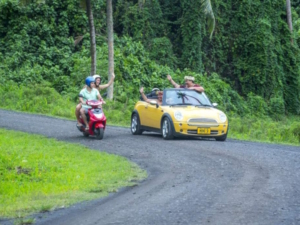 Scooters can be hired on Rarotonga and Aitutaki and are an excellent means of transportation because of their popularity on the Cook Islands and their excellent fuel efficiency. If you’ve already ridden a scooter, you’ll have no trouble navigating your way around, but if it’s your first time, you should get acquainted with the vehicle before venturing too far. You will also need to have a full motorbike licence from your home country or obtain one at the police station in Rarotonga. There are no traffic lights in Rarotonga and the country’s laid-back style is reflected in the road rules. The cost of a scooter ranges from $30 per day.
Bicycle Travel
Despite some of the roads being quite narrow, cycling is an enjoyable way of exploring the islands, because most of the traffic moves slowly. Rarotonga is probably the best island for cycling as the flat roads along the coast can be easily handled at a leisurely pace. Get your bicycle for about $25 per day or try an e-bike for $50 per day.
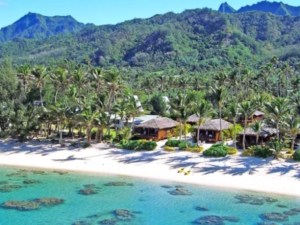 Rarotonga, or “Raro” as the locals call it, is the beating heart of the Cook Islands and just a 3.5-hour flight from Auckland. It’s the largest and most populous island in the country and the centre of most tourism, for good reason. Rarotonga is like one big resort. It is the main island of the Cook Islands and the one with the International Airport. It is the beating heart of the Cooks with so much to see and do. And despite being the main hub it remains unspoilt with no traffic lights, no McDonald’s and no building taller than a coconut tree! The island is just 32 kilometres in circumference and leaves travellers with a calming sense of tropical isolation.
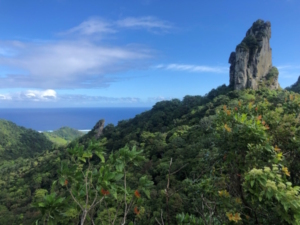 Rarotonga’s natural splendour is matched by its cultural richness, with lively local markets, restaurants and townships housing famously friendly locals to welcome you with a “Kia Orana!” (hello). The happy, friendly and vibrant people love engaging with travellers and sharing their modern Polynesian lifestyle. From lazing on the beach, and shopping at the markets to enjoying a cocktail as the sun sets at a local beach bar, the locals are right there with you, sharing in the magic and joy of island life.
The Island Dogs
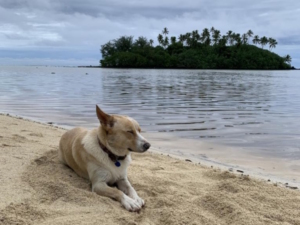 You go to any beach or actually anywhere on the island and you will see them. The island has tons of free roaming island dogs that are a huge part of the daily island scene and it’s like the community owns them. They are all extremely friendly and surprisingly all very well behaved. It was such a delight to hang with these fellow four legged sandy bums on the beach; watching them frolic in the sand and even wander into the shallow lagoon to fish. I made plenty of doggo friends all through the island; it’s certainly a memory I would cherish for life.
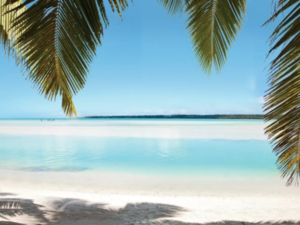 Commonly referred to as “heaven on earth”, Aitutaki is the second-most popular destination in the Cook Islands after Rarotonga. Blinding white sand beaches fringed by gin-clear waters and breezy palms make you feel like you’ve landed straight into a desktop screensaver, and the area boasts the world’s most beautiful lagoon.
Aitutaki is actually a collection of small islets known as motus, which are scattered across the region’s dazzling lagoon. Exploring untouched beaches by kayak gives you the chance to find your own hidden gems.